
Healthcare Research
Healthcare research encompasses the many ways researchers investigate health, disease, healthcare systems, and the factors that influence well-being. Across scientific, clinical, social, and humanistic disciplines, healthcare research generates knowledge that improves prevention, diagnosis, treatment, and population health.
Medical schools value all types of healthcare research, so choose the type that piques your curiosity and passion!
When reaching out to potential faculty mentors inquiring about research roles, check out this guide for drafting outreach emails.
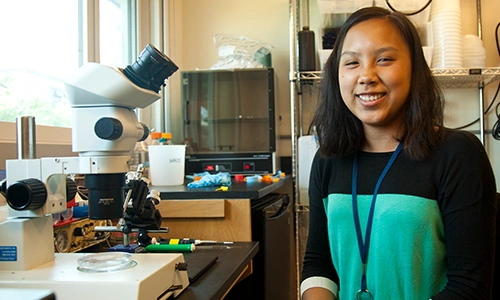
Basic Science
Investigates the fundamental biological, chemical, and genetic mechanisms of health and disease, often using cells, tissues, or animal models.
Establishes the foundation for future medical advances.
Translational
Converts scientific findings discovered through basic science research into new diagnostics, treatments, or medical technologies.
Clinical
Evaluates new methods of disease prevention, diagnosis, and treatment and often involves direct patient interaction in clinical settings.
Global Health
Examines health issues that affect populations across countries and regions, with an emphasis on improving health equity worldwide.
Community Health
Monitors, tracks, and evaluates environmental, social, and economic impacts on public health with a focus on social determinants of health, community engagement, and health equity.
Medical Humanities
Explores healthcare through disciplines such as literature, history, philosophy, ethics, religion, and the arts to better understand the human experience of illness, healing, and medical practice.